What My Brand Strategy Process Actually Looks Like
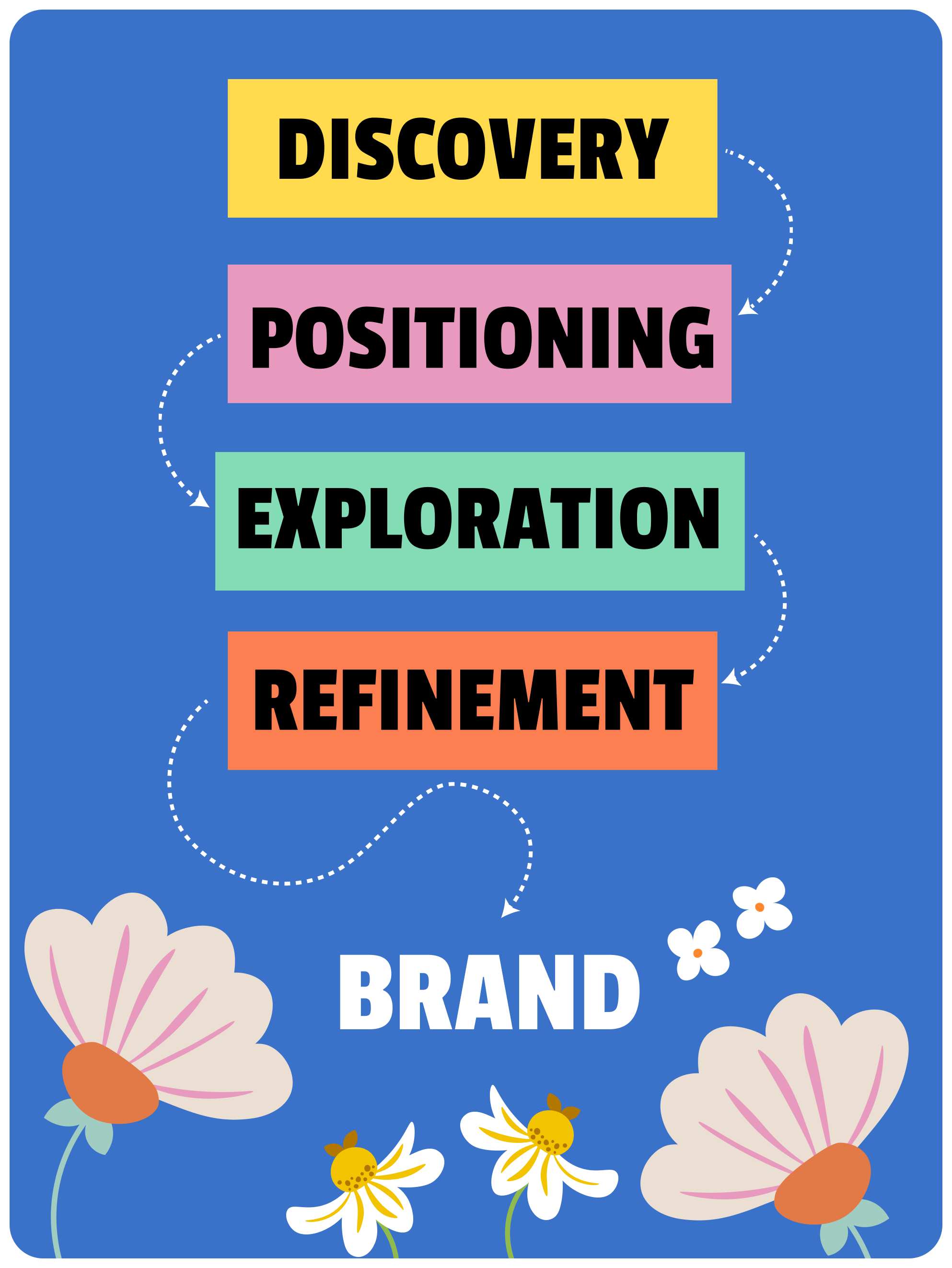
Illustration about Branding process
Behind the scenes of how I think before I design
Most design portfolios show you the before and after. The logo, the color palette, the final mockups. What they rarely show you is the thinking in the middle — the part where the real work happens.
I want to show you that part. Not because it's more impressive than the visuals, but because it's what you're actually paying for when you hire a brand strategist. And understanding it will help you come into any brand project — with me or with anyone else — better prepared.
Phase 1: Discovery (before anything visual)
Every project starts with a lot of questions. Who is the customer, really — not the demographic profile, but the person? What have they already tried that didn't work? What does success look like for them six months after they start using your product or service?
I also ask about the business itself: what are the goals for this brand? Who are the competitors and where are the gaps? What does the founder care about that isn't in the brief?
This phase takes longer than most founders expect. Some come in wanting to get to the visuals quickly. I understand the instinct, but the discovery phase is where the brand is actually built — everything after it is execution.
Phase 2: Positioning and messaging
Before I sketch a single logo concept, I write. The brand positioning statement — who you are, who you serve, what you do differently, and why it matters. The value proposition. The brand voice guide — what it sounds like, what it definitely doesn't.
I also map the competitive landscape at this stage. Where does this brand need to sit relative to the competition? What visual and verbal territory is unclaimed? What clichés does the industry default to that we should consciously avoid?
When I present this work to founders, the reaction is usually one of two things: "yes, exactly" or "no, not quite" — and both are valuable. The "not quite" responses are how I find the real positioning, the one the founder knows is true but hasn't yet put into words.
Phase 3: Visual exploration
Only after the strategy is aligned do I move into visual work. At this stage I'm not generating options at random — I'm solving a defined problem with visual tools.
I explore multiple directions: different ways the strategy could be expressed visually. Different moods, different approaches to typography and color, different levels of abstraction in the mark. The goal is to find the visual language that feels both strategically right and genuinely resonant.
I use AI tools at this stage — to generate reference images, explore color combinations, test ideas quickly. The tools don't make the decisions, but they speed up the exploration.
Phase 4: Refinement and system-building
Once a direction is chosen, the work becomes about building a complete system, not just polishing a logo. Every element needs to work together: the logo in all its variations, the color palette applied across real contexts, the typography in actual use.
I also build the brand guide at this stage — the document that makes the brand reproducible without me. Because the goal of a brand project isn't a beautiful set of files. It's a brand that works consistently over time, across every person and platform that touches it.
What this means for you
If you're a founder considering a brand project: the process I've described takes time and it requires real input from you. The best brand projects I've worked on have been genuine collaborations — the founder brought the deep knowledge of the business and customer, I brought the strategic and creative framework.
If you're a designer reading this: invest in the strategy phase. It's where your value as a designer is multiplied, not just expressed.