What It Actually Means to Be a Triple Thread Designer
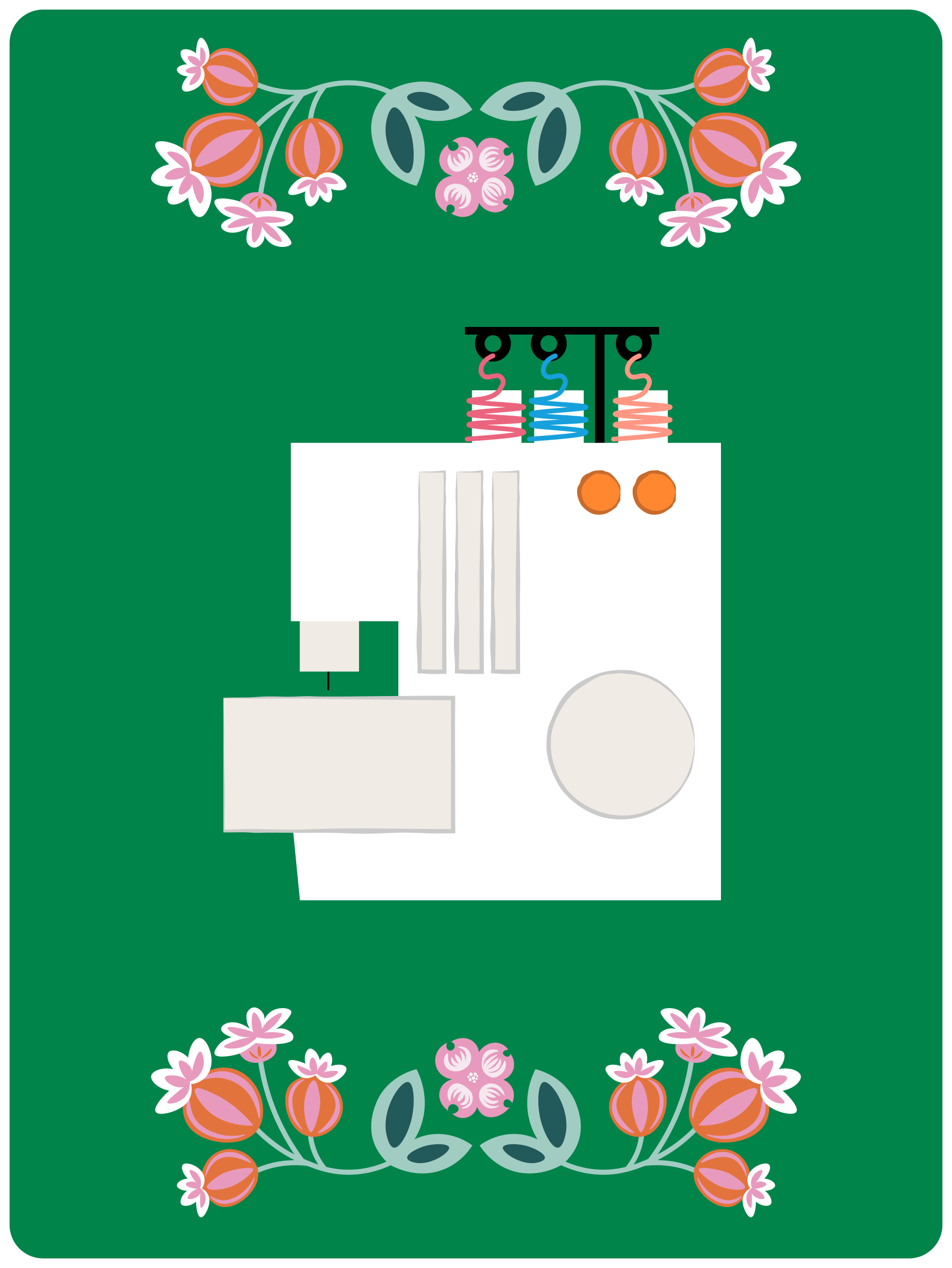
Illustration of a serger
You've never heard this term before. That's because I made it up.
But stay with me, because once I explain where it comes from, it'll make more sense than anything else I could have called it.
It starts with a serger
Sewing has been a multi-generational tradition in my family. I own multiple sewing machines, including an industrial serger — which, if you're not a seamstress, deserves a quick explanation.
A serger is a machine that cuts, sews, and seals fabric simultaneously. If you've ever looked at the seams inside a store-bought garment — that clean, professional finish — that's a serger's work. What would take a sewing machine, scissors, and several separate steps, a serger does in one swift motion.
Here's the part that matters: for a serger to work properly, you load it with three to six threads at once. Each thread does its own specific job. Together, they create something a single thread never could — a seam that's strong, clean, and built to last.
A Triple Thread Designer works the same way.
It's someone who designs with a fundamental understanding of three disciplines at once — visual design, user experience, and code — each doing its own job, all working together toward the same outcome. Like an architect with a working knowledge of engineering. The combination doesn't just make you more versatile. It changes the quality of what you produce.
The visual thread — what it looks like and why it matters
Images, colors, typography, illustration, animation — the visual layer is what most people think of when they think of design. But knowing how to make something look good is only part of it.
The deeper skill is asking: what will it take to make this better? What would that small transition animation require? How would you quantify the extra effort? Is the visual choice you made actually serving the customer, or just satisfying your own aesthetic preferences?
I was taught Photoshop over 20 years ago by my baby brother, who is now a professional animator. That's how I got into illustration. I learned Illustrator a decade later when my art rep told me I needed it so clients could recolor my designs. And you can repeat that same story for everything that followed — Sketch, Figma, After Effects, Webflow, and so on. Each one learned because the work demanded it.
That habit — sitting with something you just designed, asking yourself if it could be better, and being willing to learn a whole new tool to find out — is what separates a visual designer from a visual thinker. Once you're thinking about genuinely delighting the customer, the tools become secondary. You'll learn whatever you need to learn.
The UX thread — understand, simplify, delight
I have a tourism background. I grew up in the hospitality industry, and there was always something that happened in the best moments, a guest's face when they arrived somewhere beautiful for the first time, when they learned something unexpected, when a small detail in their room told them someone had been thinking about them before they arrived.
That experience shaped how I think about UX permanently.
The steps a guest takes to reach the resort. The first face they see when they walk in. The vibe of the lobby. The presentation of the food. The entertainment. Every single touchpoint was designed — and the ones that worked best were designed from the guest's point of view, not the resort's.
That's what UX is. Understand who your user is and what they're trying to accomplish. Simplify every step between them and that goal. Then find the moments where you can genuinely surprise and delight them. Putting yourself in your customer's perspective will do more for your design work than any tool, framework, or methodology you'll ever learn.
The code thread — knowing enough to design better
For product design, understanding code is more important than knowing how to use Figma. That's not an exaggeration.
A few years ago I attended a coding bootcamp. Not to become a developer, but to get the knowledge I needed to deliver developer-ready files, think about SaaS products more accurately, and understand the language engineers speak. That investment changed how I design.
On the product side, it means I know what's technically feasible before I design it. I'm not handing off files that require three rounds of back-and-forth to clarify intent. I'm not designing interactions that are beautiful in Figma and impossible in production.
On the brand side, it means that when I build websites, set up newsletters, or create any kind of digital presence, I understand what's happening under the hood — and I can use that understanding to do things most brand designers can't.
Why it matters
Three threads. Each doing its own job. All working together.
The visual thread gives you the eye and the craft to make something worth looking at. The UX thread gives you the empathy and the framework to make something worth using. The code thread gives you the technical foundation to make something that actually works the way you designed it to.
Most designers have one of these threads strong and the others loose. A Triple Thread Designer has all three loaded and running — and the seam it produces is something a single thread never could have made.
That's the concept. That's what I've been building toward since a baby brother sat me down in front of Photoshop two decades ago.
I just finally have a name for it.