Not Every Startup Needs a Brand Designer
DIY Brand Design Illustration
A practical guide for founders who aren't ready to hire a designer yet — and don't want to make decisions they'll have to undo later.
No, really
In general, a startup needs a product designer from day one. They'll help you navigate discovery, back your decisions with research, and get you to market faster. As soon as you have a proof of concept — before you go to market — you need a brand. Ideally, a brand designer will leverage everything discovered in the product phase and build you a brand system you can grow into.
But that's real money, and not every early-stage startup has it yet.
So here's the guide for getting as far as you can on your own — without making decisions you'll have to undo later.
One: Answer the four questions
Everything in branding starts here. Before you touch a color, a font, or a website builder, answer these:
1. What type of company or product is this?
Example: "This is a design studio."
2. Who is your primary user?
Don't just say "small business owners." Go deeper. Example: "Sean and Lissy, owners of Float Spa Raleigh — local to the Triangle area, ages 35–55, who went through a health transformation through floating therapy and became obsessed with sharing that experience with others. Their customers will leave relaxed and want to come back."
That level of specificity changes everything downstream. I want to care about my clients' brands as much as they do — which means I take the time to actually understand them. Your brand should do the same.
3. What does your company do in one sentence?
Example: "I help small business owners communicate visually in ways customers can't ignore."
4. What emotion do you want your customers to feel?
Example: "Trust." — They know I'll be intentional, and they'll be kept in the loop the whole way.
Write these down. Everything else in this guide builds on these four answers.
Color theory simple cirle
Two: Practice color theory
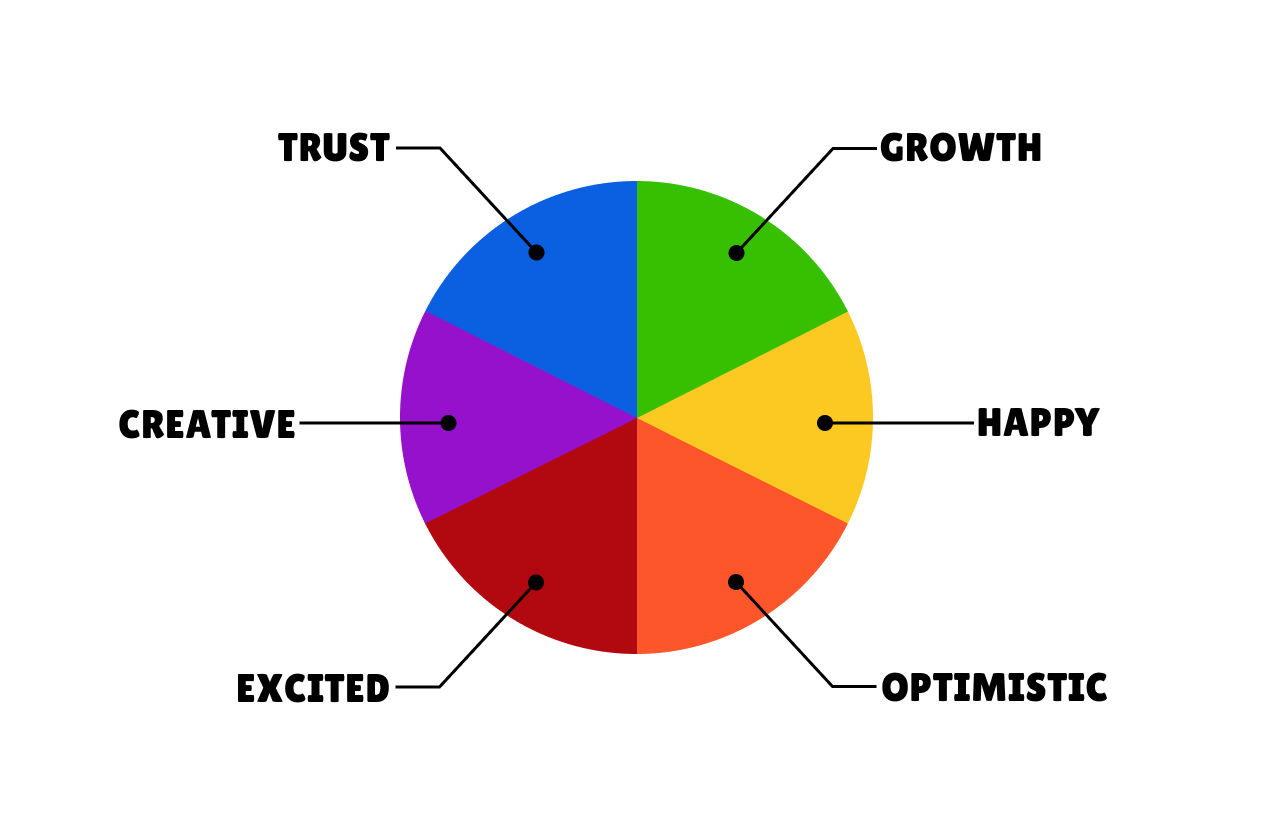
Color theory sounds intimidating. It's basically a real-life mood ring.
Every color carries an emotional association — scientifically. That's why you see a lot of blue in healthcare, green in finance, and red in fast food. These aren't accidents. They're strategy.
Use your four answers to guide your color choices. What emotion did you identify in question four? Start there. When you eventually work with a designer, they'll refine your palette for contrast, accessibility, and print quality — but a color choice rooted in intention is already miles ahead of one based on personal preference.

Placeholder logo
Three: Skip the logo. Use a text placeholder instead.
Whatever you do — don't design your own logo. And please don't hand it off to your daughter, sister, cousin, or friend "because she has good taste and knows her way around a computer." I say this with genuine affection.
Logos require real strategic thinking. They're not something you want to leave to a hunch or a family favor. If there's one place in this process where you should eventually spend real money, it's here.
In the meantime: use your company name in a clean, simple sans-serif font. Play with sizing or placement if you want — but keep it as minimal as possible. It's a placeholder. It just needs to not embarrass you while you're getting started.
Four: Build a mini design brief
A design brief is a document that captures the objectives, requirements, and constraints for a design project. Think of it as the north star for every design decision — yours now and your designer's later.
A full brief involves guided research and exercises your designer will walk you through when the time comes. For now, build a starter version using what you already have:
Project overview — Who you are, what your business does, and what problem the design needs to solve. Example: "Eloisa Docton, designer. I help small business owners communicate visually in ways customers can't ignore."
Target audience — Your end user's demographics, behaviors, and pain points. Example: "Startup and small business CEOs who need brand strategy and don't know where to start."
Goals and success metrics — What success looks like and how you'll measure it. Example: "Increase inbound inquiries by 20% by end of Q4."
Design guidelines — The colors you've chosen from step two, with a short note on why, plus your placeholder logo. Your designer will take it from here.
Fill this in honestly. When you're ready to bring in a designer, this document will save you both significant time — and probably money.
Five: Build your website with a visual site builder
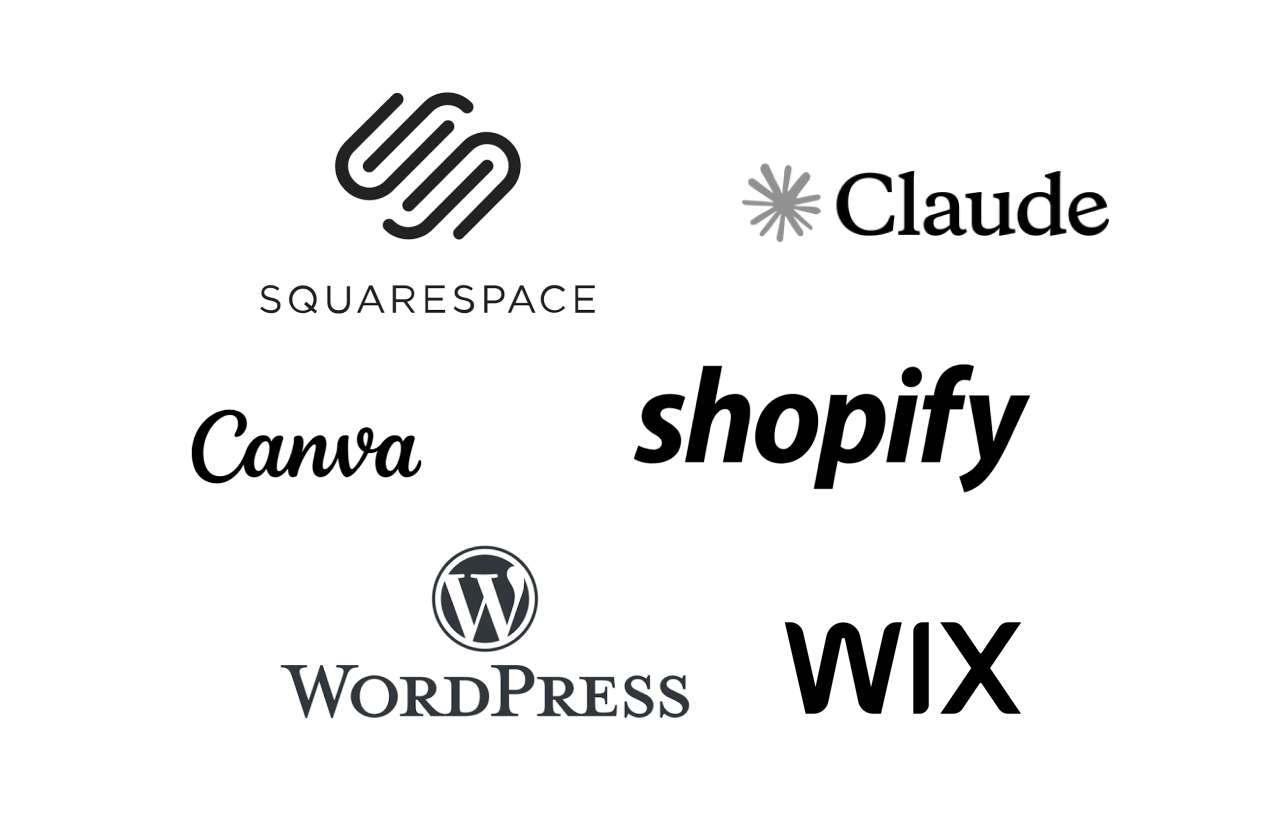
You don't need to understand web design to have a website. Tools like Squarespace, WordPress, Wix, and Shopify are drag-and-drop platforms that most people can pick up without any technical background. If you need just a few pages — which is all a startup usually needs at this stage — you can have something live in a weekend.
Apply your colors from step two consistently across the site. Your designer will revisit them later with a more technical eye — contrast ratios, accessibility, print quality — but consistent and intentional always beats random.
Six: Build a content calendar and show up consistently
You don't need to post every day. You need to post with intention.
A few ways to get started:
AI-assisted: Use the free version of Claude and ask it to help you build a content calendar. Give it your four answers from step one and it'll generate a starting point in minutes. Vet everything it gives you — it's a starting point, not a finished strategy.
Follow the 80/20 rule: 80% of your content should inform, educate, or entertain. Only 20% should directly promote your product or service.
Build content pillars: Choose 3–4 recurring themes to keep your messaging organized. Mine are Hot Takes, Branding, and Product Design. Yours should reflect what your customers actually need to know.
DIY social media: Tools like Canva make this approachable even if you've never designed anything. Use the same font as your placeholder logo, upload your brand colors into Canva's branding area, and use the built-in guides to stay within margins. Watch your spacing, stay consistent, and resist the urge to use every font and color available. Simple is professional. Complex is amateur.
Aim for at least one month of content planned in advance — blog posts, social media, whatever formats make sense for your audience. When you bring in a strategist, they'll refine this. Until then, consistency beats perfection every time.
A final note
Everything in this guide is designed to get you moving — not to replace the real thing. There will come a point where DIY stops serving you, where the placeholder logo starts costing you more than a real one would, where the website you built in a weekend is losing you clients you can't see leaving.
When that happens, you'll know. And when it does — that's what designers like me are here for.
Until then, keep building.